
Empowered Parents.
Supported Families.
Transform your breastfeeding and pumping experience with expert lactation support designed just for you. Are you a parent ready for the feeding journey you wanted?
Latest Blogs
Approximately 10–15% of mothers experience clinically significant low milk supply (LMS), but that percentage doesn't fully capture those who experience a suboptimal supply that never quite reaches the threshold of clinical concern — the mothers who are told "everything looks fine" while they know something isn't right….If low supply is a frustrating emotional puzzle, oversupply is often the breastfeeding problem nobody warns you about. Hyperlactation — producing significantly more milk than your baby requires — is frequently dismissed as a "good problem to have," yet the lived experience of persistent engorgement, recurrent mastitis, forceful let-down, inability to find comfort, and a baby who struggles to feed tells a very different story.
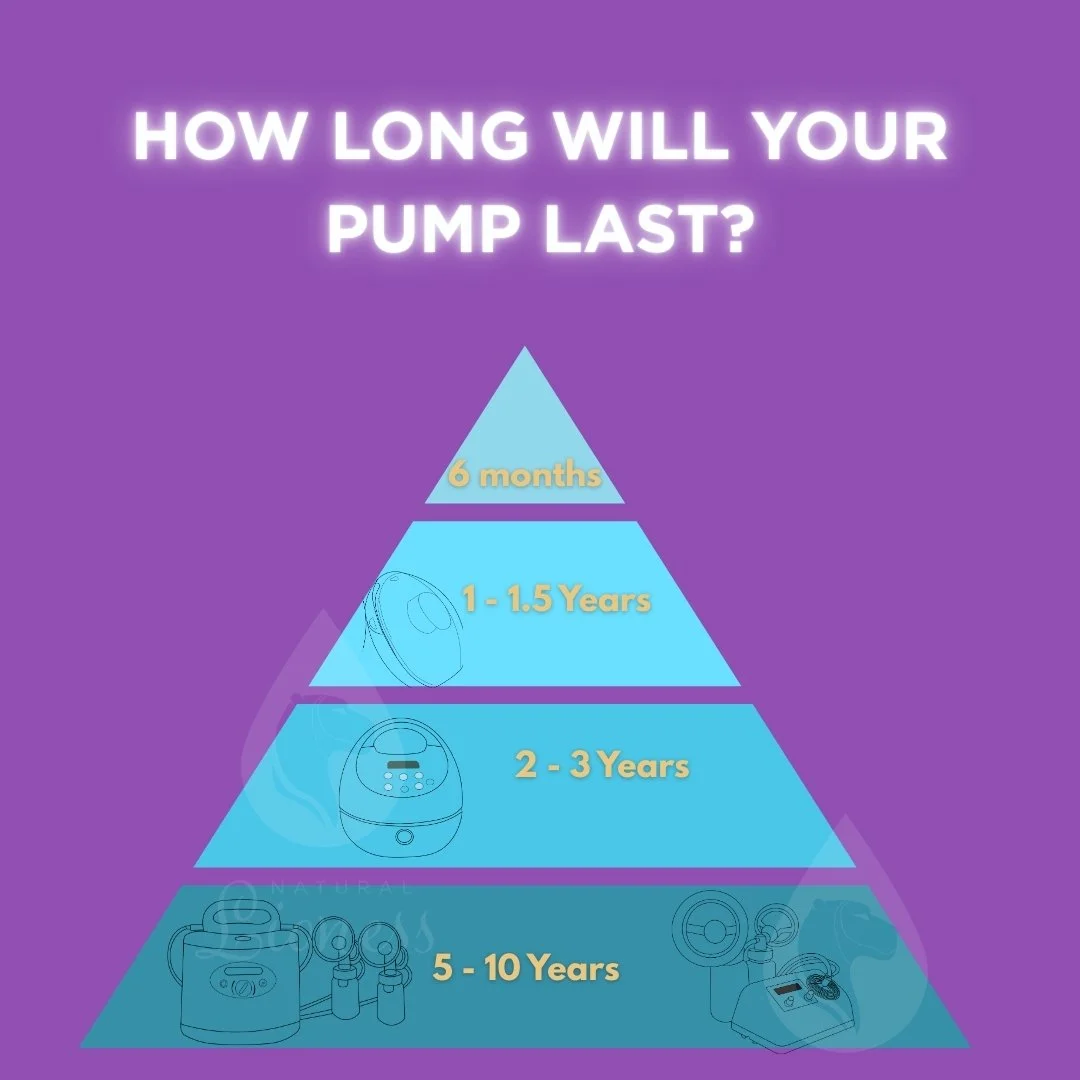
Here's something the box doesn't tell you: most breast pumps are engineered with a finite lifespan, and once the motor starts to degrade, you may not notice it immediately. What you will notice — eventually — is a slow, frustrating decline in milk output that gets misattributed to low supply, hormones, or stress.
Storing a breast pump for future use is absolutely possible with the right conditions and the right pump. However, there are several factors that need to be evaluated honestly before you box something up and assume it'll be ready to go in one or two years.
Latest Youtube Videos

New to the eufy Wearable Breast Pump S2 Pro? Here's exactly how to assemble and disassemble your pump the right way — including the common mistake that will tear up your seals and ruin your containers. As an IBCLC, I'm walking you through the parts, the lip you need to grab, and the tips that took me a few tries to figure out myself. ⚠️ Heads up on the containers: there's no intuitive grab point, and pulling on the wrong tab WILL rip your seal. I show you exactly where to hold and pull so you don't damage your parts.

I'm unboxing the brand-new eufy Wearable Breast Pump S2 Pro, the version with the heating feature, and sharing my honest first impressions, assembly tips, and the quirks I've already run into. As an IBCLC, I'm walking you through what's in the box, the case redesign, the heat + massage experience, and a few firmware bugs you should know about before buying. ⚠️ Quick note: This is a FIRST IMPRESSIONS video, not my official in-depth review. My full review is coming after I've had more time to test the pump long-term, see how the firmware updates roll out, and put it through real-world use. As always, my official reviews remain 100% independent and are never sponsored.

Eufy filed a new breast pump patent in 2025 showing vibration AND heating technology - possibly the next S1 Pro model. Here's what the patent documents reveal about features, design changes, and potential 2026 release.

Get the most comprehensive Eufy S1 Pro breast pump review from IBCLC Lisa! This in-depth analysis covers everything you need to know about this game-changing wearable pump that's quickly becoming the top contender in the pump market.
⏱️ TIMESTAMPS: 00:00 - Intro 00:42 -Disclaimers 01:34 - Design & Durability 04:22 - Teardown & Patents 04:50 - Overheating 06:01 - Battery Life 06:56 - Sound & Portability 08:19 - App & Smart Features (GAME CHANGER!) 10:01 - DIY Programming Review 11:39 - Create Your Own Baby Buddha Wearable 12:05 - Summary of Smart Features 13:09 - Suction Range & Cycle Speeds 14:12 - Parts Hack (Baby Buddha Style!) 14:35 - Sensors & Auto Shut Off 15:17 - Does the Pump Waddle Away 15:43 - Price & Value 16:39 - Replacement Parts & Maintenance 18:41 - Warranty Info 18:56 - Rant 20:25 - Final Thoughts & Summary
⚠️ Disclaimer: I am an affiliate with Eufy and received this pump for testing purposes. However, this review is 100% my honest opinion - Eufy did not influence this content and is seeing it for the first time alongside you.

Both low milk supply and hyperlactation can be expressions of endocrine imbalances — insulin resistance, thyroid dysfunction, PCOS, hyperprolactinemia — that affect your whole body's health, not just your breastfeeding journey. The science is increasingly clear on this, and evidence-based interventions do exist: from targeted lab work to blood sugar-supportive nutrition, thyroid treatment, and carefully selected supplementation.
You deserve a support team that looks at the whole you — not just the mechanical checklist — and is willing to dig deep into the science alongside you.